
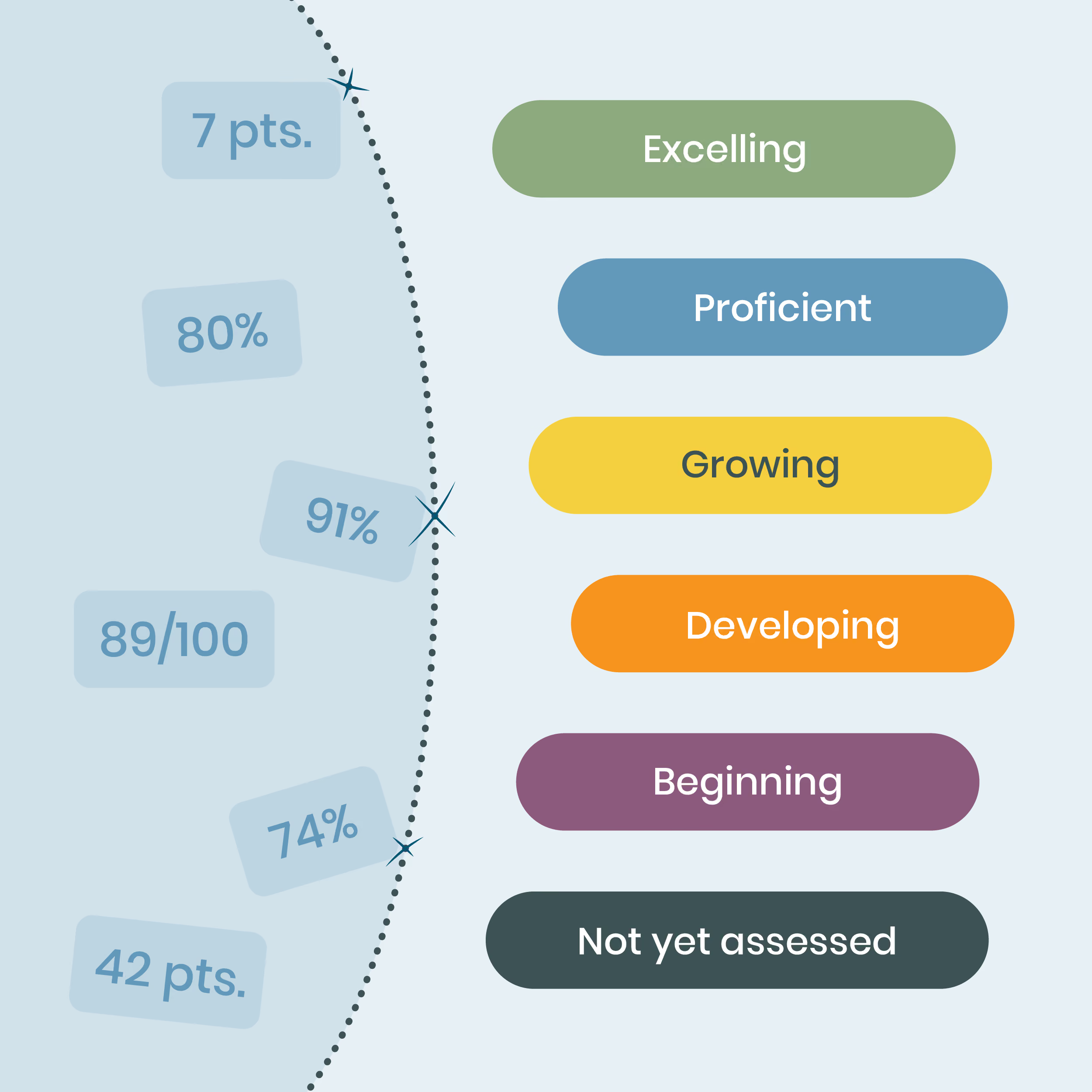
You believe students grow in their learning when they know what’s expected, where they are, and where they’re going. So you use language for feedback, instead of points and percentages.
But your gradebook doesn’t work like this. It forces you to use points and percentages instead of language to assess learning. So, you build workarounds: a spreadsheet on the side, a rubric that doesn’t work in your dropdowns or preset options, a mental translation between what you know about a student’s learning and the score you’re required to enter.
Students notice the mismatch too, and start asking how many points something is worth instead of what they’re supposed to be learning. When a report card goes home, it tells parents a number, not a story.
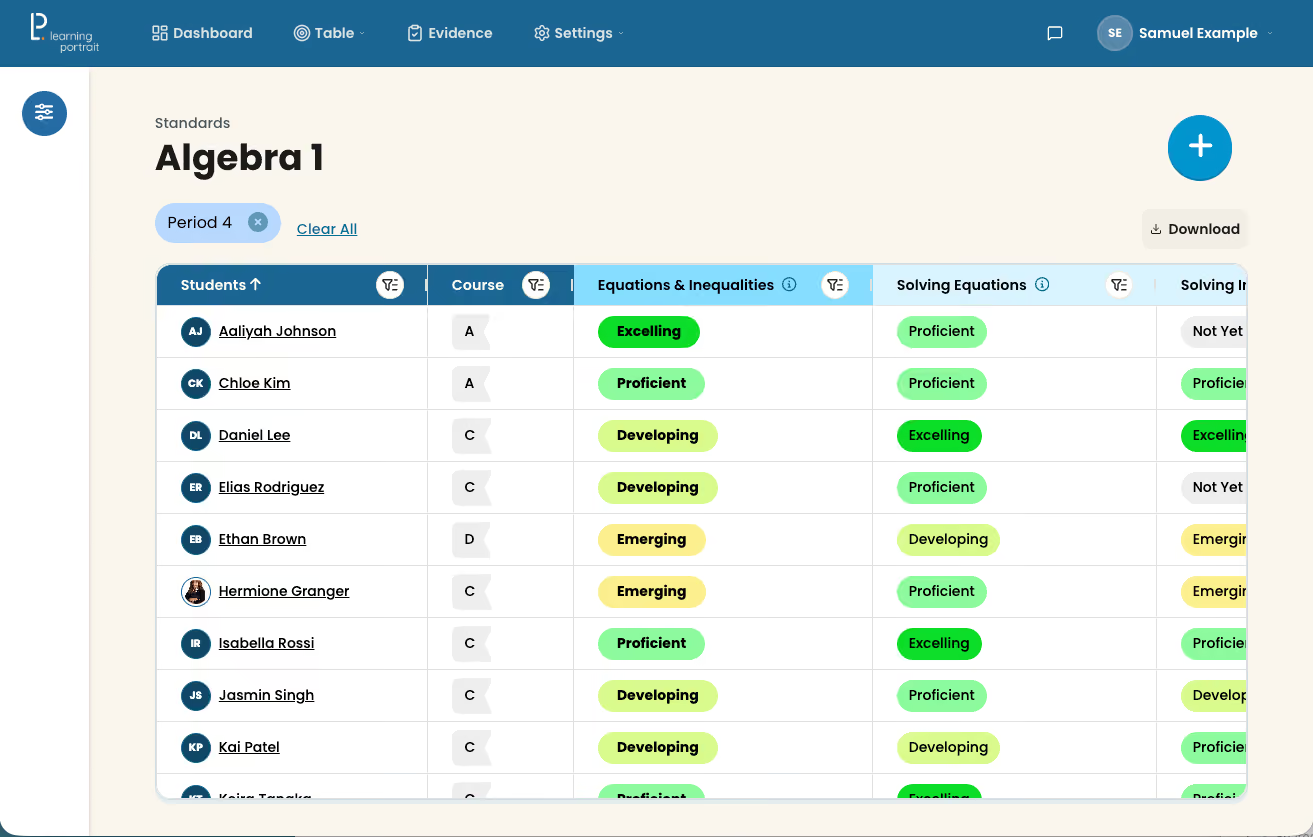
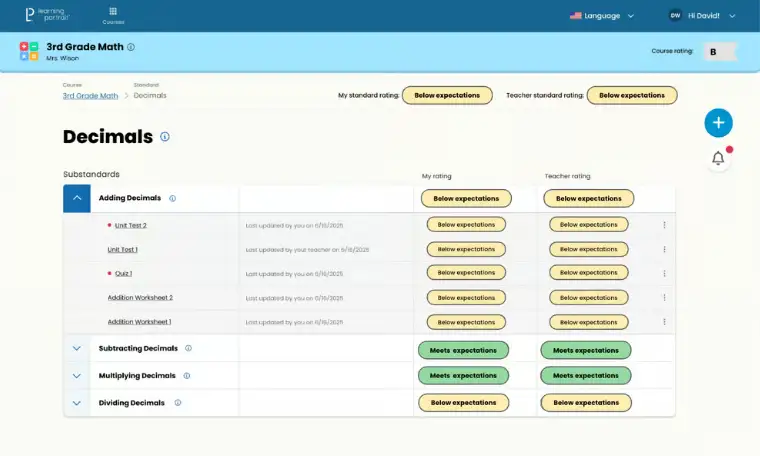
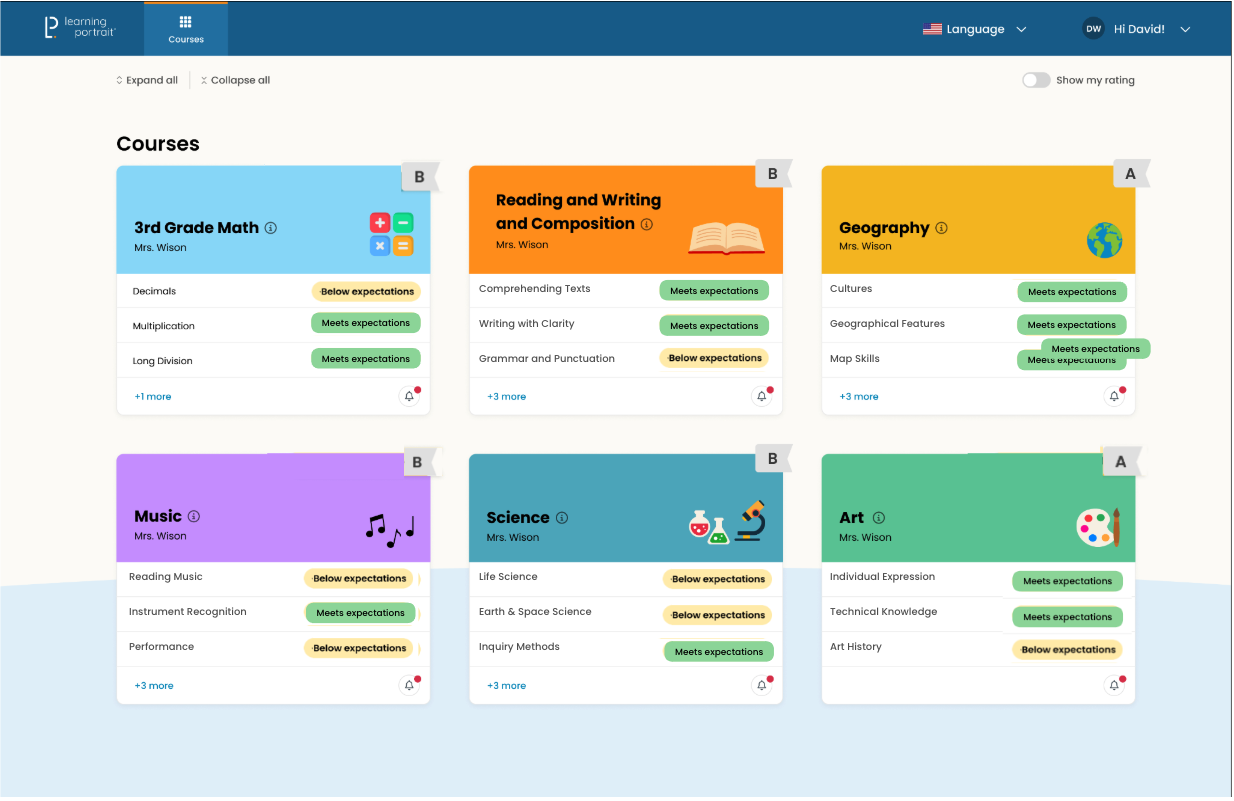
You can use a modern tool that works the way you teach. It’s simple. When you use Learning Portrait, you are centering the same three questions with every step.
What's expected?
Where am I?

What's next?

You start with clear learning objectives and what mastery looks like, in language your students already understand.
In use, mindsets change. Students stop chasing points and start seeing a challenge to master, not a score to negotiate.
You stop using spreadsheets or translating your grading into someone else’s system. Learning Portrait does it for you.
I am a Learning Portrait convert. I see it now. It is making everything more clear and meaningful."
Stephen S.
Middle School Teacher
St. Benedict Preparatory School (Chicago)
Learning Portrait has made the entire process of feedback, assessment, and grading more humanizing.”
Josh B.
Teacher
Evanston High School
It nudges you to do things differently, while other tools force more of the same."
Dr. Cathy I.
Biology Instructor
California State University, Sacramento
TK
TK
Lorem ipsum
Lorem ipsum
TK
TK
Lorem ipsum
Lorem ipsum
Right now, classroom teachers can sign up for a spot to use Learning Portrait, free. We’re keeping signups paced to what our team can fully support. Thanks for your patience as we grow.

Learning Portrait is a grading tool that empowers both teachers and students to focus on what matters most: authentic learning and growth.